The biodiversity crisis is not a future problem. We have already lost 69% of wildlife populations since 1970, and the ecosystems that underpin food, water, and climate stability are degrading faster than they are recovering. The question is no longer whether we need a market mechanism to fund nature recovery — it is whether we can build one credible enough to work.
The funding gap is real and it is large
UNEP estimates that $7.3 trillion in financial flows currently harm nature every year — through subsidies for extractive industries, harmful agricultural practices, and development that destroys habitat. Against that, total global investment in nature sits at approximately $220 billion per year. The arithmetic is stark: a 30:1 imbalance between nature harm and nature investment.
Closing that gap to meet the post-2020 global biodiversity framework targets — including the 30x30 commitment to protect 30% of land and sea by 2030 — requires an estimated $571 billion per year of additional investment. Public finance alone cannot deliver that. Private capital must be mobilised, and it requires something that public conservation programmes have historically not provided: returns, comparability, and verified outcomes.
Nature Credits are the mechanism built to provide exactly those things.
The fundamental problem: Nature provides services worth an estimated $125 trillion annually to the global economy. Yet the cost of its destruction barely registers on corporate balance sheets or government accounts. Nature Credits begin to change that by creating a price signal for ecosystem improvement.
Why previous attempts at biodiversity markets have struggled
The idea of a biodiversity credit is not new. Various voluntary schemes have existed for years — conservation finance units, species credits, habitat banking. They have consistently struggled to achieve scale for three reasons.
First, no standardisation. A voluntary biodiversity credit from one provider means something different from one issued by another. Without a common measurement methodology, buyers cannot compare credits across geographies or providers. Institutional investors require comparability; without it, they cannot build portfolios.
Second, no independent verification. Many early schemes relied on self-reported ecological data. Without a third-party verifier — independent from the project developer — buyers have no basis for trust, and no defence against greenwashing allegations.
Third, no regulatory demand. Without a requirement to disclose or manage nature impacts, the corporate incentive to purchase biodiversity credits remained weak. This is now changing — rapidly.
Carbon markets went through the same maturation cycle. Verra, Gold Standard, and mandatory compliance schemes took decades to develop. The nature credit market is at an equivalent inflection point, with the advantage of having carbon's lessons to learn from.
What makes a credible nature credit
The measurement problem is solved — or at least solvable — through standardised frameworks. CreditNature's NARIA (Nature and Restoration Investment Assessment) methodology produces an Ecosystem Condition Index (ECI) score on a 0–100 scale, assessed across four independent metrics: landscape connectivity, bird trait diversity, vegetation structure diversity, and trophic function. The ECI makes biodiversity comparable across sites and geographies in the same way that tonnes of CO₂ equivalent made carbon comparable.
The verification problem is solved through independence. Accounting for Nature (AfN) independently verifies all ECI measurement before any Nature Investment Certificate is issued. CreditNature is the first AfN-accredited nature credit platform. This separation between measurement and verification is non-negotiable — without it, credits are promises, not outcomes.
The registry problem is solved through traceability. Credits are issued, transferred, and retired on a registry. Retirement is permanent and publicly recorded. A buyer can verify that a credit they purchase represents real, verified ecological improvement — and that it has not been sold to anyone else.
What credibility requires: Standardisation + independence + transparency. All three must be present. A credit that is standardised but self-verified is not credible. A credit that is independently verified but untraceable is not credible. All three elements are required.
The regulatory tailwind is here
The voluntary phase of nature disclosure is ending. TNFD — the Taskforce on Nature-related Financial Disclosures — has now been adopted as a mandatory or semi-mandatory disclosure framework in several jurisdictions, and more are following. The EU's Corporate Sustainability Reporting Directive (CSRD) requires large companies to report on nature-related impacts and dependencies. These regulations are creating structured corporate demand for high-quality nature credits to report against.
This changes the investment case for nature credits fundamentally. When demand is purely voluntary, market development is slow and fragile. When demand is driven by regulatory obligation — particularly one with legal and reputational consequences for non-compliance — it becomes structural and predictable.
The landowner opportunity
Supply is the other side of the equation. The UK and European countryside contains enormous areas of land with genuine biodiversity restoration potential — degraded agricultural land, former industrial sites, poorly managed peatlands, second-growth woodland, drained wetlands. This land can generate Nature Credits if properly managed and independently verified.
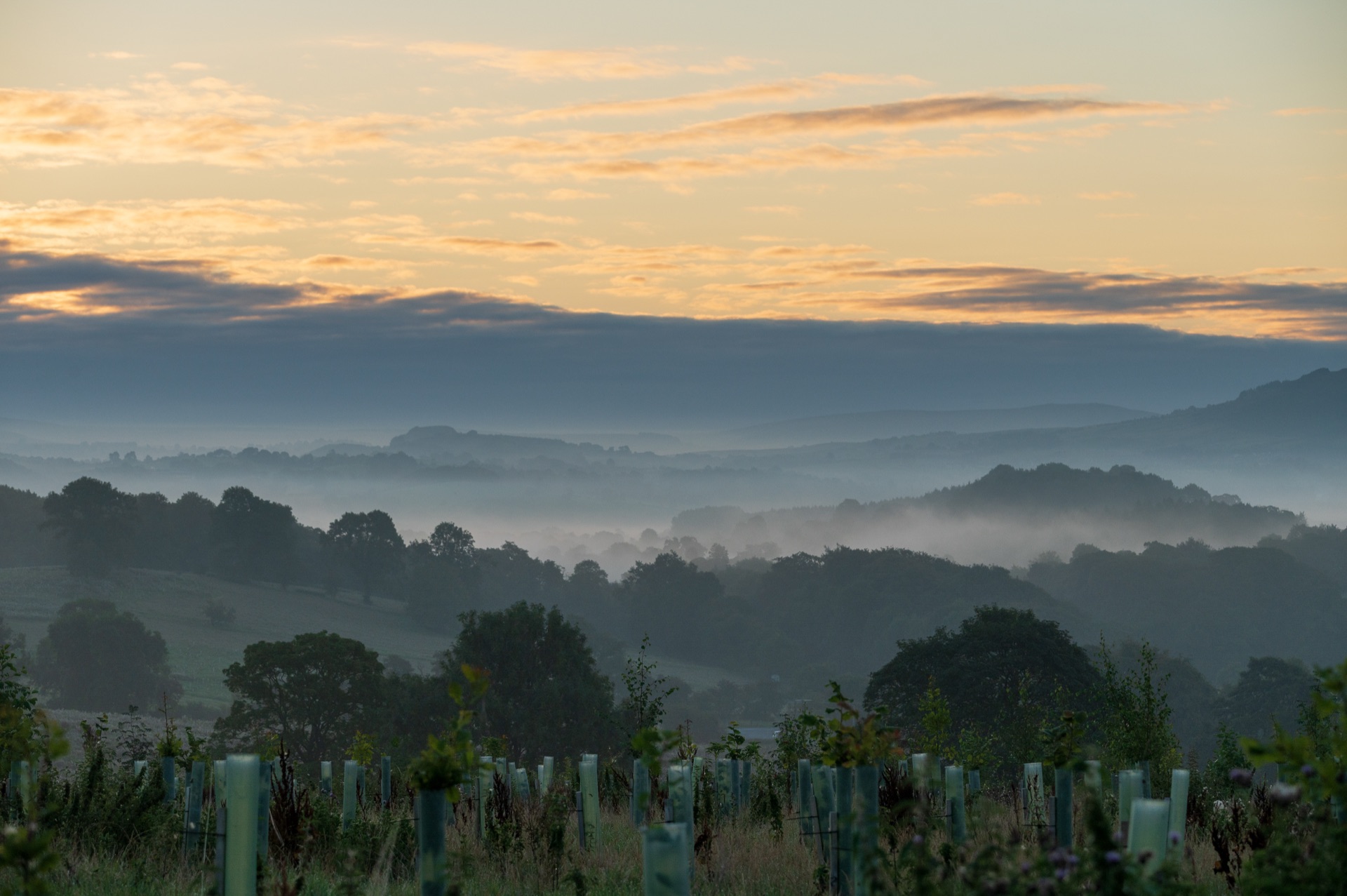
Broughton Sanctuary in Yorkshire is one example. A 607-hectare estate now under a ten-year nature recovery programme, Broughton demonstrates what verified nature recovery looks like in practice — managed interventions, annual monitoring, AfN verification, and credits issued against real ecological improvement. The landowners gain a new revenue stream. Investors gain a return with a verified impact. Buyers gain a credible instrument for nature-related reporting.
Why now
Three things are converging simultaneously. Regulatory demand is arriving — TNFD and CSRD are creating structural buyer demand for the first time. Institutional capital is mobilising — asset managers and family offices are actively seeking high-quality nature investments. And the measurement standards now exist to underpin a credible market — NARIA, ECI, and AfN accreditation provide the rigour that previous voluntary schemes lacked.
The window to build a well-designed nature credit market — rather than a poorly designed one — is open now. The decisions made in the next three to five years will determine whether biodiversity markets achieve the scale and integrity needed to make a material difference to nature outcomes, or whether they follow the path of earlier voluntary environmental markets and become a reputational liability.
CreditNature's position is that rigour is not optional. The short-term commercial pressure to simplify, to reduce measurement costs, to move faster — all of it must be weighed against the long-term cost of a credibility collapse. The market that survives is the one that earns institutional trust.